
If you’re a business owner looking to grow, it’s essential to track customer acquisition metrics to gauge the effectiveness of your marketing and sales efforts.
In this article, we’ll cover 12 customer acquisition metrics worth tracking in order to ensure that your business is on the right track. I’ll share why their important, how to measure them, and examples of how to improve each metric.
Let’s dive in.
What is customer acquisition?
Customer acquisition refers to the process of acquiring new customers for a business. This is an important aspect of growing and scaling a business, as acquiring new customers is essential for long-term success.
As you’d expect, there are a whole slew of different strategies and tactics that businesses can use to acquire new customers, including marketing, sales, and customer service efforts.
Some common methods of customer acquisition include:
- Advertising: promoting your business through various channels, such as social media, search engine marketing, or traditional advertising methods like TV or print. Advertising allows you to reach a wider audience and attract new customers to your business.
- Content marketing: creating and distributing valuable, relevant, and consistent content in order to attract and retain a clearly defined audience. The goal of content marketing is to establish your business as a thought leader in your industry and attract new customers through informative and educational content.
- Networking: building relationships and connections with other businesses or individuals in order to promote your business and attract new customers. Networking can be done through in-person events, online communities, or by joining professional organizations.
- Referrals: encouraging current customers to refer their friends, family, or colleagues to your business. Referrals can be a powerful way to attract customers, as people are more likely to trust recommendations from people they know.
- Sales: actively reaching out to potential customers and trying to sell them your products or services. This can be done through in-person meetings, phone calls, or online interactions.
Why is customer acquisition important?
Customer acquisition is essential for the growth and success of any business.
Without acquiring new customers, a business will eventually plateau and stagnate. Here are a handful of reasons why customer acquisition is so important:
- Revenue: New customer acquisition is mission critical for generating revenue and driving the growth of a business. Every time a business acquires a new customer, they have the potential to generate revenue through the sale of products or services.
- Customer retention: acquiring customers is also important for customer retention. By continuously acquiring new customers, a business is able to offset any potential losses due to customer churn (total customers lost).
- Brand awareness: acquiring customers can also help to increase brand awareness and reach a wider audience. As new customers learn about a business and its products or services, they may share this information with their own network, which can lead to a virtuous cycle.
- Market share: acquiring new customers can also help a business to increase its market share and compete more effectively in its industry. By consistently bringing in new customers, a business can expand its customer base and potentially take market share away from competitors.
Customer Acquisition Metrics
The metrics I’ll walk through below will give insight into how customers are finding, engaging with, and purchasing from your business.
You’ll get all sorts of benefits once you start tracking and improving these metrics:
- Figure out what’s working to inform your customer acquisition strategy
- Determine whether or not you’re reaching the right target market
- Reduce your customer acquisition costs (i.e. sales and marketing costs)
- Generate future marketing campaigns
- Optimize performance over time and use your marketing budget more effectively
1. Customer Acquisition Cost (CAC)
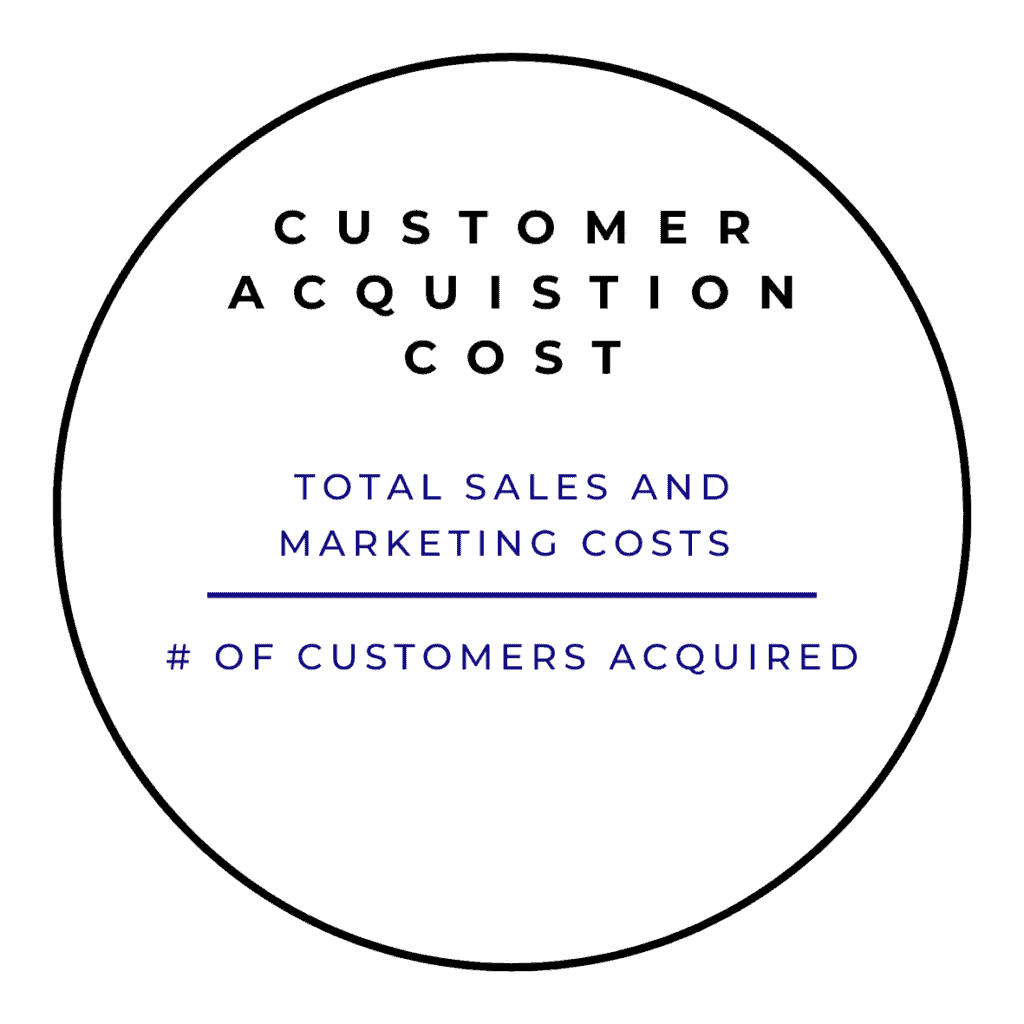
CAC is the total cost of acquiring a new customer, including marketing and sales expenses.
Once you start to measure customer acquisition, you’ll start to understand the efficiency of your ability to acquire customers. Almost any business can improve their customer acquisition efforts, but you can’t improve without consistent measurement.
Example: if you spend $1,000 on marketing and sales efforts and acquire 10 new customers, your CAC is $100 per customer.
Ideas to Improve: focus on increasing the efficiency of your marketing and sales efforts, such as through the use of targeted advertising or more efficient sales processes.
2. Conversion Rate
The percentage of visitors to your website, landing page, or sales page who make a purchase. Tracking this metric will help you understand the effectiveness of your marketing and sales efforts.
Example: if 100 people visit your website and 10 of them make a purchase, your conversion rate is 10%.
Ideas to Improve: Focus on optimizing your website for click through rate and conversions:
- Using compelling calls-to-action
- Improving website copy
- Giving a sense of urgency and reason to act now
- Improving your offer and positioning
- Adding more reviews, case studies, and proof points
- Fixing any user experience issues

3. Customer Lifetime Value (CLV)
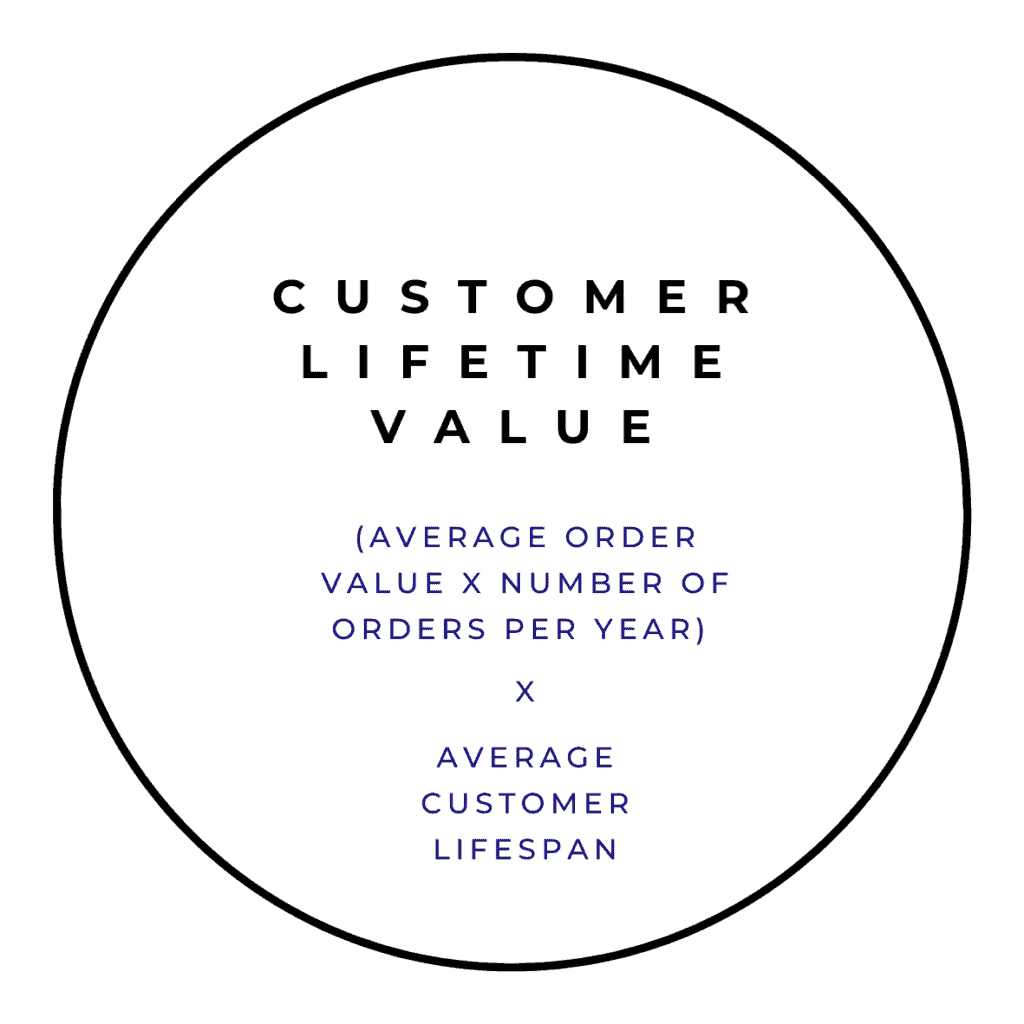
This is the total amount of money a customer is expected to spend on your products or services over the course of their lifetime. Knowing your CLV will help you understand the value of existing customers and determine how much you can afford to spend on customer acquisition.
Example: if the average order value for your business is $100, the average number of orders per year is 2, and the average customer lifespan is 5 years, the CLV for a customer would be:
CLV = ($100 x 2 orders/year) x 5 years = $1,000
This means that the estimated value of a customer to your business over their lifetime is $1,000.
Idea to Improve: focus on increasing customer retention and loyalty, such as through the use of loyalty programs, value ladders, or excellent customer service. For a deeper dive, I recommend checking out my detailed guides on customer loyalty ladders and improving customer lifetime value.
4. Churn Rate
This is the percentage of customers who stop using your products or services over a given time period. Keeping track of your churn rate will help you identify and address any issues that may be causing customers to leave.
Example: if you have 100 customers and 5 customer lost in a month, your churn rate is 5%.
Idea to Improve: focus on improving customer satisfaction and addressing any pain points that may be causing customers to churn.

5. Net Promoter Score (NPS)
NPS is probably the #1 measure of customer satisfaction and loyalty.
It’s also extremely easy to calculate – ask customers to rate their likelihood of recommending your product or service to others on a scale from 1 to 10.
Example: if 50% of your customers rate you a 9 or 10, your NPS is 50.
NPS is calculated by subtracting the percentage of customers who are “detractors” (those who rate you a 0-6 on a 0-10 scale) from the percentage of customers who are “promoters” (those who rate you a 9 or 10).
So in this case, if 50% of your customers rate you a 9 or 10, and there are no detractors (customers who rate you a 0-6), then your NPS would be 50.
Idea to Improve: focus on delivering an excellent customer experience and addressing any customer complaints or issues in a timely fashion.
6. Customer Acquisition Channel
You’ll need to understand where your new customers are coming from in order to optimize your marketing efforts. Tracking the customer acquisition channel will help you understand which marketing channels are most effective at bringing in new business.
Tracking the customer acquisition channel will help you understand which marketing channels are most effective at bringing in new business. Once you learn this, you might want to rethink your current marketing strategy.
Example: if 50% of your new customers come from social media marketing and 25% come from search engine marketing, you know that these are effective channels for your business.
Idea to Improve: look at testing and optimizing different marketing channels to see which ones are most effective at driving customer acquisition.
I’d be willing to bet you have 1 or more underperforming customer acquisition channels and on the flipside – one that makes up the vast majority of your customers acquired. Double down on what’s working and pour more gas on the fire.
7. Lead-to-Customer Ratio
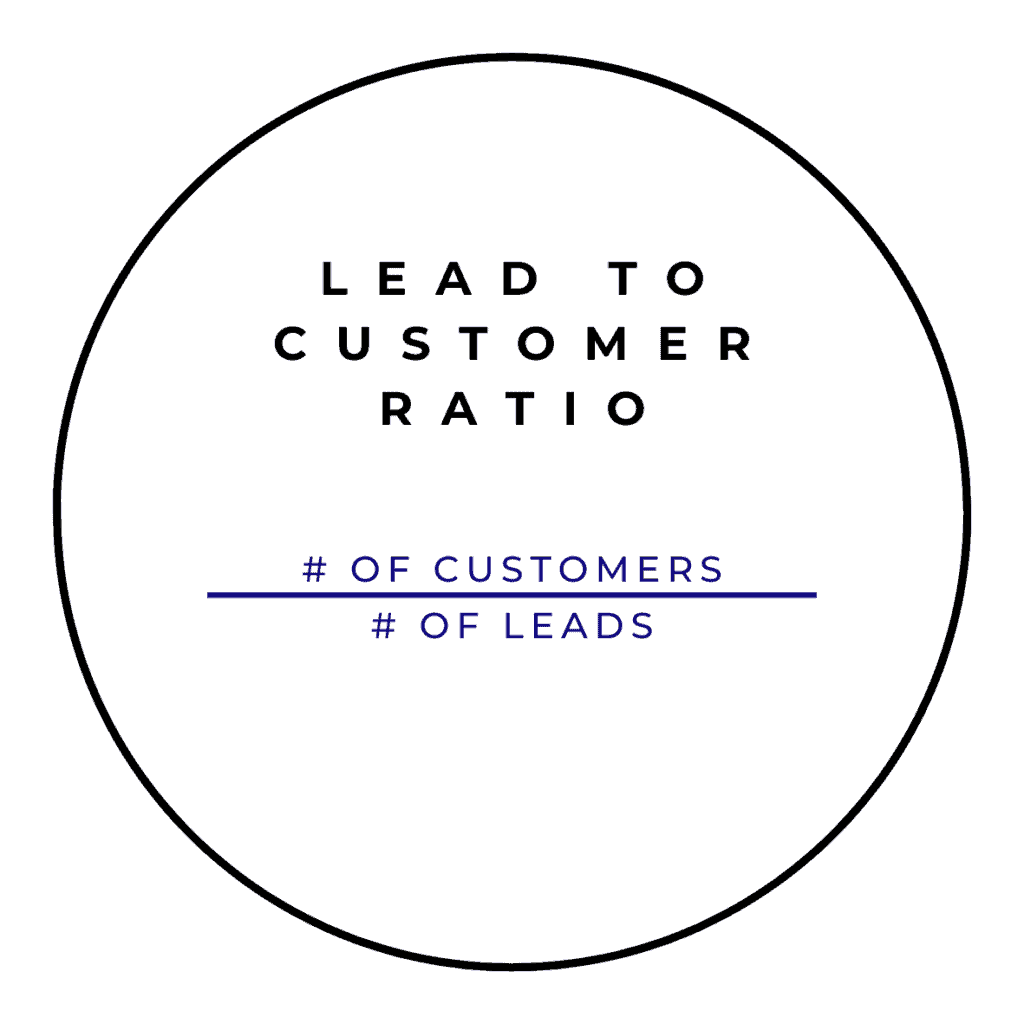
This is the number of leads (potential customers) that you convert into paying customers. Tracking this metric will help you understand the effectiveness of your sales process and identify any bottlenecks or areas for improvement.
Example: if you have 100 leads and 20 of them become paying customers, your lead-to-customer ratio is 20%.
Idea to Improve: look at optimizing your sales process, such as by providing sales training for your team or improving your lead qualification process.
8. Lead Response Time
This is the amount of time it takes for your sales team to respond to a new lead. A quick response time is important in order to capitalize on the lead while they are still interested in your product or service. Believe it or not, only 27% of leads get contacted at all – this a major improvement opportunity for businesses of all sizes.
Example: if it takes an average of 24 hours for your sales team to respond to a new lead, you may want to consider ways to improve your response time.
Idea to Improve: focus on streamlining your lead response process, such as by automating initial contact or providing sales team members with the resources and tools they need to respond quickly.
9. Sales Cycle Length
This is the amount of time it takes for a lead to become a paying customer. Tracking the average sales cycle will help you understand the length of your sales process and identify any bottlenecks or areas for improvement.
Example: if it takes an average of 30 days for a lead to complete the sales process and become a paying customer, your sales cycle length is 30 days.
Idea to Improve: you can focus on optimizing your sales process, such as by streamlining steps or providing better sales training to your team.
10. Average Order Value (AOV)
This is the average amount of money that a customer spends per transaction. Tracking this metric will help you understand the value of your customers and identify opportunities to upsell or cross-sell.
Example: if your business had total revenue of $50,000 from 500 orders placed over the course of a month, your AOV would be:
AOV = $50,000 / 500 orders = $100
This means that the average order value for your business was $100.
Idea to Improve:
- Think about providing incentives for customers to spend more
- Offer more attractive discounts that encourage higher average order values
- Focus on offering additional products or services to customers (hint: if you don’t have a high ticket offer you are leaving profit on the table)
- Optimize your pricing strategy

11. Repeat Purchase Rate
This is the percentage of customers who make more than one purchase from your business. A high repeat purchase rate is an indicator of customer loyalty and satisfaction.
Example: if you have 100 customers and 50 of them make a second purchase, your repeat purchase rate is 50%.
Idea to Improve: To improve this metric, you can focus on delivering an excellent customer experience and offering incentives for repeat purchases, such as through the use of loyalty programs.
12. Shopping Cart Abandonment Rate
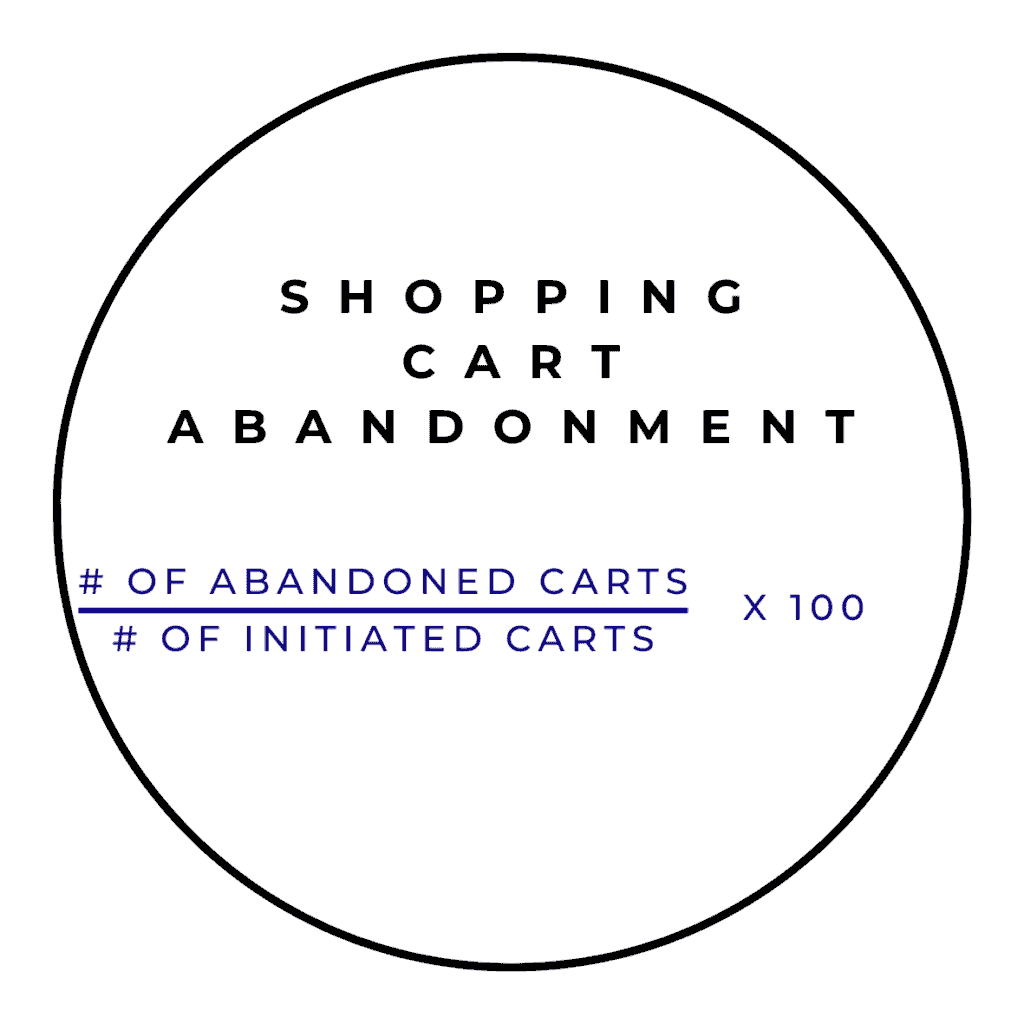
This is the percentage of customers who add items to their shopping cart but don’t complete the purchase.
This metric can identify areas for improvement in your checkout process and help you understand any pain points that may be preventing customers from completing their purchase.
Example: if 100 people add items to their cart, but only 80 of them complete the purchase, your shopping cart abandonment rate is 20%.
Idea to Improve:
- Focus on streamlining your checkout process and providing customers with more payment options.
- Think about offering customers the ability to save their carts for later use. This will make it easier for them to complete a purchase when they are ready.
- If they do abandon, do you have a nurture email follow-up sequence in place? If not, this is low hanging fruit and will likely increase profits.
Wrap Up
Tracking these customer acquisition metrics will help you understand the health and growth of your business and identify areas for improvement.
If you aren’t tracking these already, I’d recommend not trying to do it all at once – start with a couple and begin tracking them on a regular basis. This will give you better insight into how your efforts are driving customers to your business and what changes you can make to improve results.
I hope you found this post helpful – feel free to leave a comment if you have any questions.

