
A Quality of Earnings report (QoE) can be an critical step in the M&A due diligence process, as it can eliminate unpleasant surprises that could reduce the sale price or cripple a transaction.
Whether you’re looking to sell your business or evaluating a potential acquisition, QoE is a process to help you avoid the fate of the 70 – 90% of acquisitions that fail (HBR).
In this post, I’ll cover 9 things you need to know about QoE – we’ll cover what a Quality of Earnings port is and why it matters.
Let’s get started.
What is a quality of earnings report?
A Quality of Earnings (QoE) report is a detailed analysis of a company’s financial statements, with the goal of evaluating the quality and sustainability of its earnings. It’s often used by potential investors or lenders to assess the risk of purchasing or lending to a company.
To create a QoE report, an analyst will review a company’s financial statements, including its income statement, balance sheet, and cash flow statement. The report will typically analyze earnings, revenue, expenses, tax-filing positions, profitability, as well as its use of non-operating income and unusual or one-time items.
A QoE report is a significantly more detailed view than audited financials, and can be a critical part of the due diligence process for a potential buyer.

Key Benefits of a QOE
- Helps potential buyers understand the underlying drivers of a company’s financial performance and identify any potential red flags or areas of concern.
- Provides another layer of confidence that the accounting methods are consistent, and that the financials are being interpreted accurately.
- Can provide valuable insights into a company’s financial health and help to assess the risk and potential return on an investment or loan.
- It helps to identify the quality and sustainability of a company’s earnings.
- It can provide valuable insights and recommendations for improving a company’s financial performance and maximizing shareholder value. The report may recommend ways to reduce costs, increase efficiency, or diversify the company’s revenue streams.
Quality of earnings report cost
In general, these detailed reports can cost anywhere from a few thousand dollars to tens of thousands of dollars. Many firms offer packages with different levels of analysis and detail at different price points.
Who prepares a quality of earnings report?
A Quality of Earnings report is typically prepared by an independent accounting firm that has expertise in financial analysis.
Why might a company need a quality of earnings report?
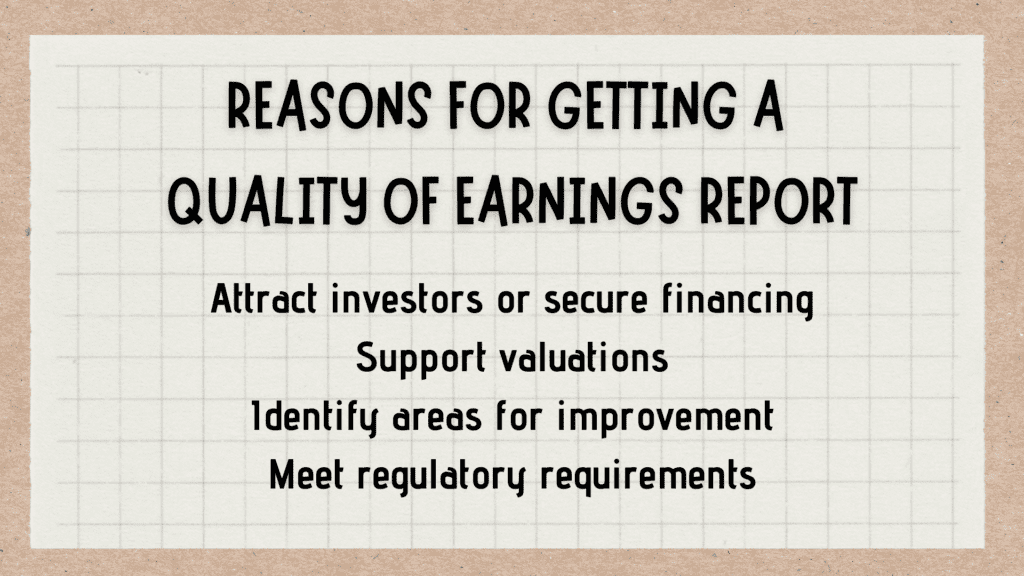
- To attract investors: A QoE report can provide potential investors with peace of mind.
- To secure financing: A QoE report can also be useful for a company seeking financing from lenders, as it can help lenders to evaluate the risk of lending to the company and determine the terms of the loan.
- To identify areas for improvement: A QoE report can highlight any weaknesses or potential issues in a company’s financial statements, allowing management to address these issues and improve performance.
- To support valuations: A QoE report can be used to support valuations of a company during the sale process, and to help determine a fair purchase price.
- To meet regulatory requirements: For larger public companies, a QoE report may be required by regulatory agencies or industry standards.
How long does a quality of earnings report take?
On average a QoE report takes around 30 days to complete, but the time it takes can vary based on a few factors:
- Availability of financial information
- Detail and scope of the report
- Size and complexity of the company’s business operations
- Level of expertise and experience of the firm preparing the report
What factors affect quality of earnings?
- Accruals: Accruals are estimates of future costs or revenues that are recorded in the current period. If a company uses overly aggressive accruals, it can artificially inflate its earnings.
- One-time events: One-time events, such as asset sales or restructuring charges, can significantly impact a company’s earnings. These events should be disclosed separately from ongoing operations to give a clear picture of the company’s financial performance.
- Revenue recognition: The timing and manner in which a company recognizes revenue can affect the quality of its earnings. If a company recognizes revenue prematurely or in a manner that does not follow generally accepted accounting principles (GAAP), it can lead to inflated earnings.
- Expense recognition: Similar to revenue recognition, the timing and manner in which a company recognizes expenses can affect the quality of its earnings. If a company delays recognizing expenses or uses overly aggressive estimates, it can artificially inflate its earnings.
- Off-balance sheet transactions: Off-balance sheet transactions, such as lease obligations or special purpose entities, can impact a company’s financial performance. If these transactions are not properly disclosed, it can lead to a misleading portrayal of the company’s financial health.
Quality of earnings report checklist
Let’s run through some key aspects of a QOE report that will be covered in a typical sale process.
Overview of financial statements
Financial statement analysis may include a summary of the company’s profit and loss statement, balance sheet, and cash flow statement, as well as any significant trends or changes over time.
Assessment of revenue
This may include an analysis of the company’s revenue streams, the sources of its revenue, and any trends or changes over time.
Evaluation of expenses
This may include an analysis of the company’s operating expenses, such as cost of goods sold, selling and administrative expenses, and research and development expenses, as well as any trends or changes over time.
Analysis of profitability
This is a breakdown of the business’s earnings and may include calculations of key profitability ratios, such as the net income, and a comparison to industry benchmarks and the company’s own history.
One key aspect of a QoE report is the assessment of a company’s earnings quality. This involves evaluating whether the company’s reported earnings accurately reflect the underlying performance of its business. For example, a target company may have high earnings but low cash flow, which could indicate that the earnings are not sustainable or are being artificially inflated through the use of accounting practices such as aggressive revenue recognition or cost capitalization.
Review use of non-operating income
This may include an analysis of any non-operating income, such as investment income or gains on the sale of assets, and an assessment of its impact on the company’s earnings.
Analysis of the company’s financial statement presentation
This may include an evaluation of whether the company’s financial statements are presented in a clear and transparent manner, and whether they accurately reflect the company’s financial position and performance.
Review of the company’s management and business model
This may include an evaluation of the company’s management team, its business model, and any risks or uncertainties that could impact its future performance.
Potential Red Flags
- Overstated revenues or profits due to accounting errors or fraud
- Understated expenses or liabilities that are not properly recorded or disclosed
- Depreciation or amortization policies that do not accurately reflect the true value or useful life of assets
- Unsustainable or one-time sources of revenue or profits that are not expected to continue in the future
Conclusion
As we covered, a quality of earnings analysis can provide valuable insights into a company’s financial health and help you make informed decisions about your business.
Regardless of if you’re selling or buying a business, I hope this post helped provide a better understanding of what a QoE report entails. As always, consult with your M&A advisors once you begin the process.
Happy to answer additional questions in the comments if there’s anything else I can do help.
If you’re interested in going deeper, this is part of a series of posts I’ve created related to due diligence:

