
Are you a business owner looking for the best and most efficient ways to build a high performing team?
Building high performing teams team isn’t something that just happens – it requires intentional effort and focus.
In this post, I’ve rounded up 19 common characteristics and practices of high performance teams that you can implement within your organization.
Building High Performing Teams: What Do They Have in Common?
Building high performing teams that deliver outstanding results requires a number of key ingredients.
The good news is that the world’s highest performing teams have a lot in common and we can learn from their success.
From breaking down silos to fostering collaboration, these actionable tips will get you on the right track to build an effective team.
Let’s get started.
1. Use Motivation Based Interviewing
When interviewing potential candidates, use techniques that focus on evaluating a candidate’s motivation and rather than relying solely on technical skills.
This takes no additional time but can translate to a much more effective interview process.
By focusing on skill, attitude, and high emotional intelligence, you can identify self-motivated people who have the potential to grow into high performers. Ask candidates thought-provoking questions about their interests, past experiences, and future goals.
These kinds of questions can be difficult to answer off the cuff, so it’s likely that those who are prepared for such questions have taken the time to think through how they want to present themselves.
It’s also a good idea to ask candidates how they would go about tackling a problem or task. This will give you insight into their thought process and how well they’d fit in with your team.
2. Hire A Players and Pay Competitively
One of the best ways to build a highly effective team is to make sure you’re hiring the right people in the first place.
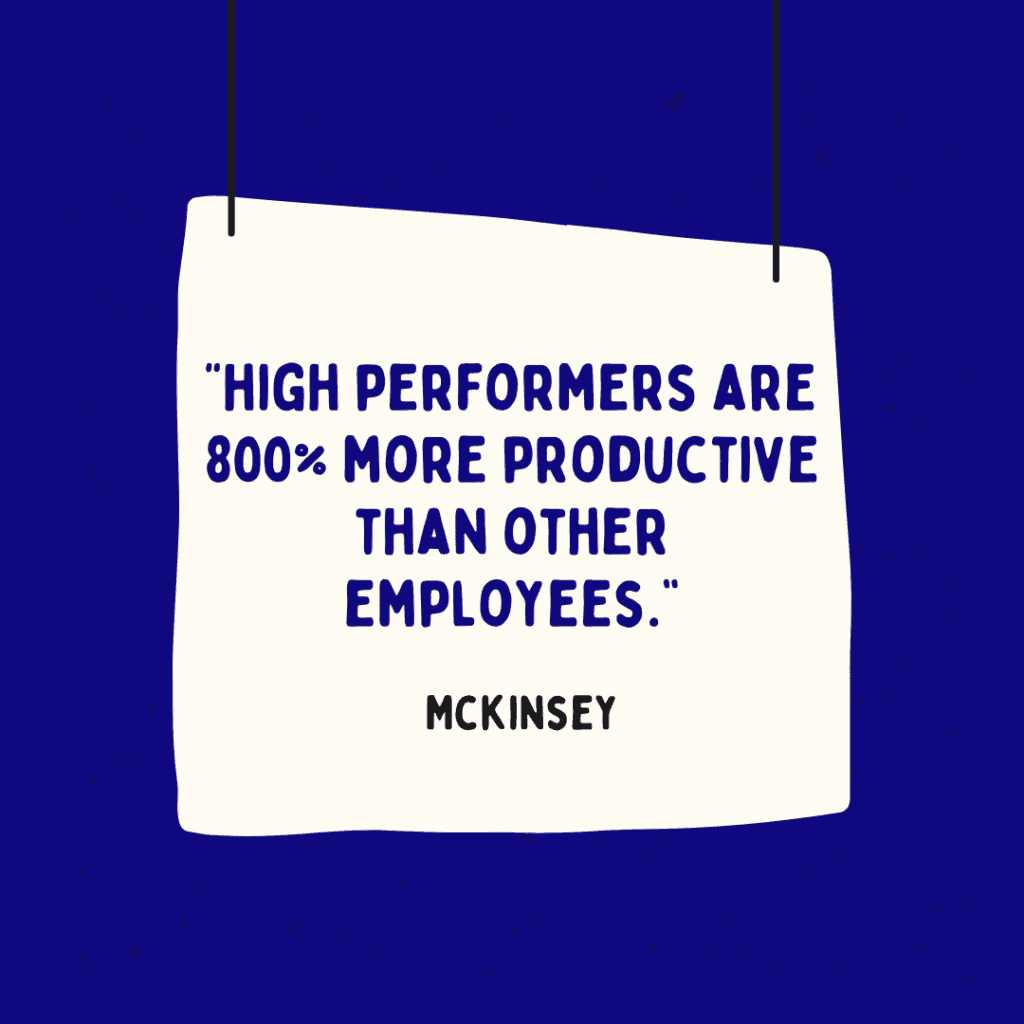
Think about how you can hire top talent with complementary skills and pay them competitively. According to McKinsey, “high performers are an astounding 800% more productive than other employees.”
I recommend paying generous salaries for these top performers – 30-40% above market value.
A Players are typically highly motivated, bring a wealth of experience and skill sets to the table, and can quickly become productive members of the team. They tend to be more creative when it comes to solving problems, have higher standards for their work, and are willing to go above and beyond in order to get the job done.
By hiring A players you’ll also create an environment that encourages others on your team to strive for excellence as well. This will lead to increased productivity and can serve as an incredible competitive advantage.
3. Create a Comprehensive Onboarding Program
A comprehensive onboarding program is essential for helping new employees understand their roles and expectations and get things off on the right foot.
According to research from the Brandon Hall Group, a positive onboarding experience increases new hire retention by 82% and improves new employee’s productivity by 70%.

Your onboarding process should include a tour of your workplace, introductions to key people in the organization, and an overview of the culture and incentives offered by your company.
It should also provide an understanding of each department’s goals and objectives so that new hires can see how they fit into the overall team structure.
Simply put: you want to do all you can to set your people up for success.
4. Create a Strong Culture and Compelling Mission
Every high performing team needs a strong culture, shared values, and a mission to which people can aspire.
Provide frequent opportunities for team members to connect with the company’s mission, vision, and values in meaningful ways. This will ensure that everyone has a shared sense of what overall success looks like for the company.
Whether it’s through regular all-hands meetings or casual conversations over coffee, make sure your team has access to this information and feels a shared vision and the same values.
5. Be Honest and Transparent
An environment of trust and openness is essential for any high performing team. Be honest with your team about the challenges you are facing, the goals you hope to achieve, and any changes that may be coming down the pipeline.

Don’t sugarcoat anything during hiring process and be clear about the positive and negatives aspects of the job.
This transparency will help to build trust between your employees and management and create an environment that fosters open communication and collaboration.
6. Lead by Example
As the team leader, it’s essential that you lead by example.
Set a good example for your employees by bringing respect, integrity, and dedication to your work. Be willing to go above and beyond when needed and take on tasks that may not be in your job description. Show them that you are invested in the success of the organization as a whole.
Another critical point: make sure to recognize good performance publicly so that everyone can see what is expected of them. Praise employees for the hard work they do and provide incentives when it makes sense. This will help encourage positive behavior among all members of the team.
7. Encourage Candor, Feedback, and Open Communication
Create an environment that encourages candor, constructive feedback, and open communication. Encourage your team to talk openly and honestly about their work, ideas, concerns, and successes.
Even the best teams have challenges, but effective teams have folks who are comfortable expressing their thoughts without fear of judgment or repercussions.

The last thing you want are “yes men” who blindly follow orders.
This will help foster a sense of trust between you and your employees and shows that you value employee input and want them to be a part of the decision-making process. It will also go a long way to avoid communication issues.
8. Get to Know People on a Personal Level
It’s important to get to know each one of your employees on a personal level. Treat people as humans first, employees second.
I’d encourage your team leaders take the time to have conversations with their teams around their lives, families, and interests outside of work.
- What are their kids names?
- What are their hobbies?
- What gets them excited outside of the office?
Regardless of your team size, being a good listener is one of the top leadership skills that enables a high performance team.
These conversations will help you build trust and psychological safety with your team members, which in turn can lead to a working environment that’s far more productive.
It also shows that you genuinely care about your employees and are invested in their success. This kind of personal connection is often the sort of thing that motivates people to do their best work.

9. Monitor Employee Satisfaction
Many leaders give this lip service but I urge you to take it seriously if you really want to maximize your team’s performance.
It’s critical to regularly monitor employee satisfaction and get a sense for team dynamics, particularly within large teams.
This could include asking each team member for their feedback on a regular basis through surveys, 1-on-1s or focus groups. If you don’t already, consider tracking employee NPS going forward.
You should also be observant of any signs that an employee is disengaged, such as reduced commitment or enthusiasm for tasks. If you do notice this happening, take the time to talk to the employee and see if you can identify any underlying issues that need to be addressed.
10. Set Clear Goals and Expectations for a High Performing Team
Provide clear measurable goals and expectations to your team members. Let them know what is expected from them and how their performance will be assessed.
Top teams are goal oriented and continuously track progress along the way to let everyone know where they stand.

This helps set a standard for success and encourages employees to take ownership of their own learning and development. Employees should have a clear understanding of the roles they need to play in order to contribute to the company’s overall growth.
By providing key priorities and smart goals, you can ensure that everyone on the team is working towards a common goal.
11. Implement Recognition and Rewards Programs
Recognition and rewards are a great way to show employees that their hard work is valued. If you want to bring in top talent and build a high performing team, this is table stakes.
By implementing programs such as employee recognition awards, special bonuses for exemplary performance, or even something as simple as an “employee of the month” program, you can show your team how much you appreciate their contributions.
12. Learn What Motivates People
As you know, team members are not one size fits all. Find out what motivates each employee, as each person will have significantly different personality traits and goals.
What is their “why” and what are their career aspirations?

Some may be motivated by recognition, financial rewards or the chance to take on more responsibility. Whatever it is, strive to give them the tools they need to reach their goals and show how much you value their contributions.
The key is to make sure you’re encouraging employees to stay engaged in their work and appreciated by creating an environment of trust, mutual respect, and appreciation.
13. Limit Bureaucracy, Headaches, and Red Tape
No one likes to waste time and energy dealing with bureaucracy or red tape, and high performing teams are no exception.
Make sure that any processes your organization has in place are straightforward and easy to understand.
Streamline any confusing policies so that employees know exactly what is expected of them and how they can get the job done without having to worry about endless paperwork or frustrating roadblocks.
Also make sure the resources your team needs are readily available so they don’t have to fight for what they need in order to do their jobs effectively. This will help minimize frustration and create an environment where everyone can work more efficiently and productively.
14. Encourage Communication & Collaboration
Creating an open work environment encourages collaboration and communication between each team member.
Does each member on your team feels like they can communicate effectively?
Make sure everyone has access to each other’s new ideas and opinions to help everyone feel valued and connected, even if they don’t physically work together every day.

15. Allow for Flexible Work Schedules
Creating a flexible work schedule can be beneficial for both employers and team members alike. Allowing employees the freedom to choose their own hours or take advantage of remote working opportunities can give them more control over how they manage their time, leading to far greater job satisfaction.
It can also help employees feel more productive and creative, as they don’t have to work within traditional office hours.

16. High Performance Teams Provide Autonomy
Allow your team members to take ownership of their work and make decisions on their own.
While you should set the overall vision, empower your team to figure out the “how” for how to get there.
This will give them a sense of autonomy and encourage them to be creative and innovative in their approach, which leads to increased motivation and job satisfaction.
When employees have the opportunity to make decisions without having to check in with a manager every step of the way, they’re more likely to take ownership of their work and see it through to completion.
By empowering your people, you’ll not only improve team performance, but you’ll also create an environment where everyone feels valued for the unique contributions they bring to the team.
17. Be Appreciative
As Maya Angelou said, “People will forget what you said, people will forget what you did, but people will never forget how you made them feel.”
Showing appreciation goes a long way in creating an environment of respect and dignity. You should be sure to thank your team members for their hard work and dedication, especially through navigating challenges like a global pandemic.

As I mentioned earlier, offering rewards and incentives can further motivate employees to perform at their best while feeling appreciated and respected. These rewards don’t have to be monetary – recognition through awards, prizes or special events can also help show your appreciation.
By showing your team how much you value them and the work they do, you’ll create an environment where everyone feels valued and respected.
Go out of your way to show your appreciation, it will likely go further than you can even imagine.
18. Provide Regular Feedback
One of the key characteristics of high performance work teams is effective communication through transparent feedback.
Your employees should know where they stand in terms of performance and progress on individual tasks or projects. Providing regular feedback allows them to understand what they need to do in order to continue performing at a top level.
Regular feedback also gives your team members something tangible they can focus on while getting better results over time. It’s important that this feedback comes from both managers and peers, as it can offer different perspectives on how to improve.
By providing regular feedback to direct reports, you’ll not only show your employees that their work is valued, but also help them see what areas need improvement and how they can reach their goals. This will give them the confidence and motivation they need to continue pushing forward.
19. Professional Development Opportunities for Continuous Learning
Investing in team development opportunities is one of the best ways to attract and build a high performing team.
According to LinkedIn, 94% of employees would stay longer with employers who invested in training and education opportunities. High performing team members are always looking for ways to fill their skill gaps and knowledge.
You can provide formal training sessions and team development opportunities such as webinars, workshops, or conferences; or informal learning opportunities like lunch-and-learns or mentor programs.

There are many benefits to offering these types of opportunities:
- Keeps your team motivated
- Shows that you are invested in the growth and development of our team
- Expands skill sets and prepares folks for future leadership roles
These kind of experiences will not only give them the skills they need to do their job better but can also help them feel more fulfilled in their roles.
Next Steps: Your High Performance Team
I hope you found this post helpful and you had some takeaways around how to build high performance teams and create positive team dynamics.
By following these steps, you’ll create an environment of trust and respect, build effective teams and unlock your company’s success and potential.
If you have any other strategies or ideas around creating high performing teams, I’d love to hear from you in the comments.

